
I’ve been to a lot of staff meetings over the course of my career as a public school teacher. In nearly every meeting, there are two words that fall regularly off the lips of school leadership: achievement and on-track. What do these words mean in the context of education and how might they be detrimental to the actual purpose of the education system? Let me explain.
Achievement
Achievement is a word used to describe the level of work produced by a student in their classes (particularly core classes like math, science, etc.) or the level at which they are scoring on standardized tests. This level of work is measured by the metric of grades (generally A-F) or by a numerical score for standardized tests.
Grades are sometimes produced by the total scores on all assignments (usually including those not turned in which would count as a O%). The final grade may also be a product of a points system where the semester grade is calculated by looking at the total points scored out of the total possible points for a given course. Grades may also be weighted by category.
Standardized tests measure a student’s ability to take a test. They ignore various variables that greatly impact scores. These variables include reading comprehension, familial or social stresses on test day, lack of test experience, test anxiety, and just plain old being awful at tests despite other gifts and talents.
When schools and policy makers discuss “achievement,” they often use it as the sole source of understanding a student’s learning and quality of mind. If a student has good grades or high test scores, they are a high achiever; if they have low grades or low test scores, they are a low achiever. There are many problems with “achievement” discourse. While there are so many issues with how standardized test scores are used as data points, this discussion of “achievement” discourse will emphasize grades and graduation in the high school setting.

- Achievement discourse assumes that all student metrics are accurate and valuable points of data. There are many reasons why teacher data on students is often not the most useful in assessing student intelligence nor student ability. One reason is that In order for a data point to be valuable, there must be a sufficient sample size. If a student turns in very little work and are given an F, that F does not say anything about their intelligence, learning, or ability. It simply represents that the student does not attend school very often or turns nothing in or both. A second reason teacher data points can be less reliable is that many teachers use different grading systems. This means that Timmy could do the same amount and quality of work in two different sophomore English classes (taught by different teachers) and get an astoundingly different grade–even though the amount of work Timmy did in either class is identical.
- The link between school “achievement” measures and future success in life is mostly unfounded. Achievement discourse is built around measuring students and schools so that organizations that oversee schools (districts, school boards, state legislators) can make judgement calls about how well the school is fulfilling its purpose. These measurement systems were not created to show how much a student has learned or what they know–though sometimes they may do that. If you have bad grades and bad test scores, you risk not graduating. If you don’t graduate high school, you are statistically far more likely to live in poverty or engage in criminal activities in the future. But is this because of students’ lack of learning or because of the badge of shame and lack of opportunity that come from not graduating high school? Most would argue the latter. There are plenty of kids who graduate high school who also end up committing crimes or living in poverty. The idea that “achievement now means achievement later” is mostly unfounded. “Opportunity now means opportunity later” may be a more accurate mantra.
- Achievement and learning are not synonymous. The Oxford Dictionary defines the act of achieving as “to succeed in reaching a particular goal, status or standard, especially by making an effort for a long time.” Let me tell you that the effort hardly makes a difference in 99% of public school grading and scoring situations. A student who is immensely gifted in Language Arts could put very little effort into an essay and receive an A. Conversely, a student who sees writing as a weak point of theirs may spend hours on an essay only to have it graded as a C. Who is the better student? Achievement discourse would say that the first student is better because they achieved at a high level. Unfortunately, they learned nothing new. But school is about getting good grades, not about learning. The second student may have learned much as they worked very hard on their essay, but achievement discourse ignores learning for the most part. Achievement discourse cares about one thing: what did the kid do and how do we measure that thing so we can place them into a category?

On-Track
As mentioned earlier, graduating high school is seen as a major indicator for future life situations. More recent research has found that schools that identify students early on who are at risk for not graduating, focus on them from freshman year and keep them “on-track” to pass classes greatly increase their likelihood of graduation–thus decreasing their likelihood of living in poverty or committing crimes. On-track systems are successful in this regard. More kids graduate. There are absolutely benefits to this. But do they get a better education or a worthwhile education? What capacity do they have to read, write, think, and increase their livelihood through the opportunities that accompany higher levels of literacy? I am not sure. But we got them a diploma and they are no longer the responsibility of the public school system. In this system, a high school diploma is no longer representative of skill and learning, it is a hoop to jump through so that school systems can say they did their part by getting the kids through. Some kids get through having learned a lot. Some kids get through having learned nothing. Who is holding a diploma on graduation day will not help you identify which is which.
How Do We Make School About Learning and Not Just Achievement?
The current school system is doing its best to support a multitude of systems, protocols, and accommodations that have been added to it. These additions that have accumulated over the last 100 years are mostly good things aimed at providing quality education to all types of students from all types of backgrounds. The problem is that very little about the structure, organization, and practices of education has changed in the last 100 years. Classrooms and schools look about the same as they did 100 years ago minus some aesthetic adjustments and the addition of technology. They are still rooms with desks stuffed with kids who are the same age being taught a single subject by a teacher at the front of the room. How so much has been added to the plates of teachers with little adjustment to their schedule and compensation is one of the greatest hoodwinks in American professional history.
Below, I offer some possible solutions and adjustments that could help public schools shift from factories that produce diplomas to what they are meant to be: places of learning.
- Stop Organizing Kids by Age. Sir Ken Robinson was the first individual I heard bring up this idea, though I am sure other before him discussed it. While it is important that early elementary aged students learn social skills and play with children their own age, at some point we should shift to organizing students by skill level in a given subject. Why? Too many kids are shoved along to the next level despite a serious lack of skills, and too many kids are stifled because they are far ahead of many other students in their classes. Each subject should have a tiered list of skills and performance objectives that are organized into levels. Students can test out of levels based on skills they’ve developed at home or on their own. Students will always be with other students at their own level, and teachers will be better enabled to help learners learn because they won’t have to make lesson plans that must account for the various skill levels among students. This would also help destigmatize the concept of “being held back.” There is no age based progression–only capacity based progression. You could be a level 8 artist but at level 4 in math, and that is okay! This solution provides a better environment for student learning and a better context for teachers’ planning and delivery of learning. Of course, skills are not everything. These tiers would also include important experience and project based objectives that require students to engage with concepts on a personal level.
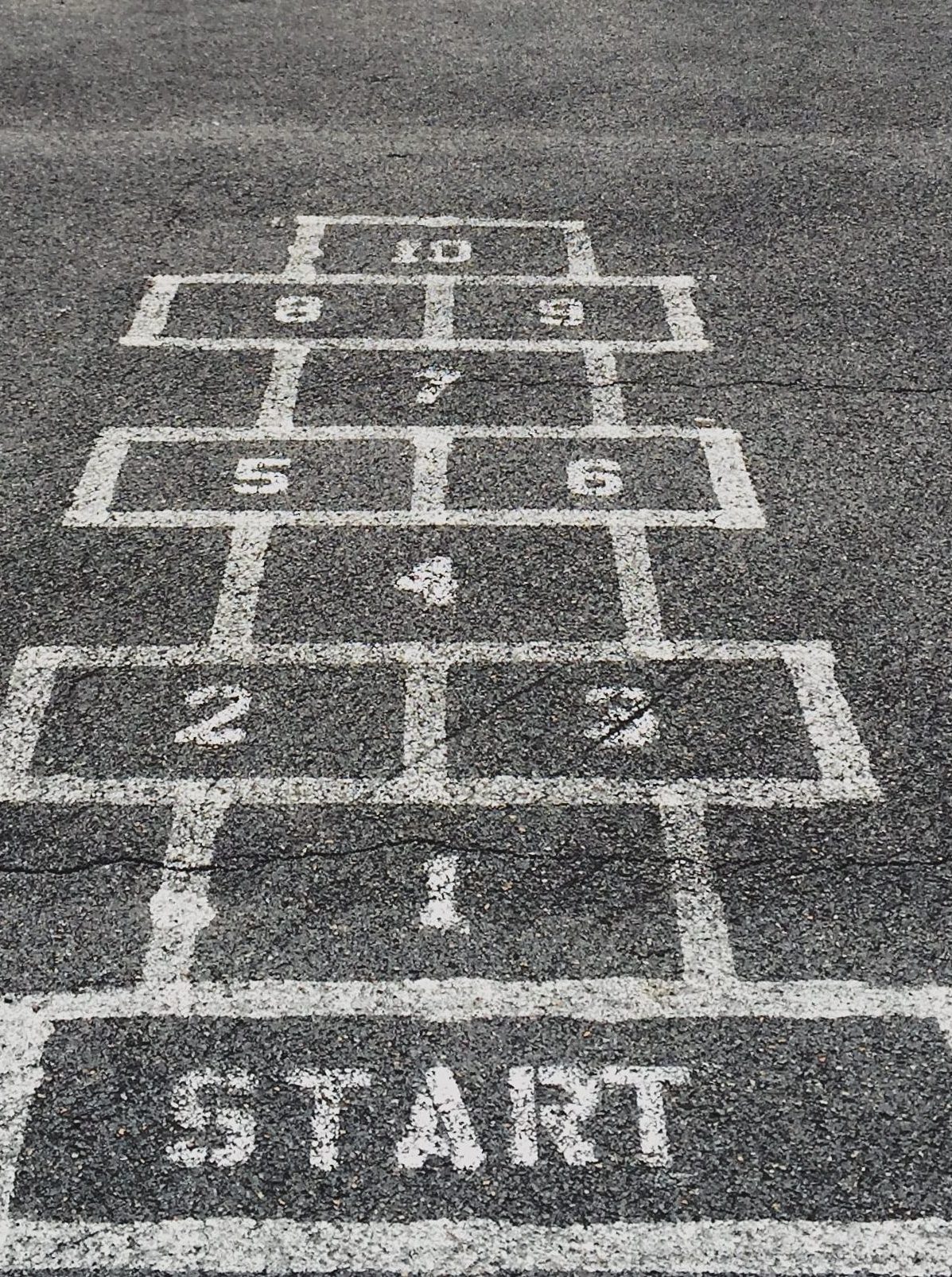
- Get Rid of Grades. In a tiered skills-based system for core classes, grades would be pointless. Either you have the skills necessary to move to the next level or you don’t. If I am learning to play guitar, I don’t get a grade on how well I play chords before I start learning new ones. I either have it or I don’t. So much of grades is hocus pocus. You just punch in assignments to the gradebook. Kids basically get a passing grade on these assignments if they show up and try. Sadly, an A in many of my classes means you have a pulse and you tried–how uninspiring. Of course a large part of that is my fault, but our current grade system incentivizes this sort of thing. Furthermore, grades put kids in boxes. Too many kids who are intellectually behind feel smart because they have As and too many bright kids think they are dumb because they have Cs, Ds, and Fs. John Merrow once remarked that we need to stop asking “how intelligent are [students]” and start asking “how are [students] intelligent?” What an inspiring and motivating thought. Kids are not machines that just need to have X amount of data loaded in. They are complex little people with hopes, passions, talents, and dreams. School for them should be meaningful and clear. It should not be tedious. It should be an organized progression of gaining essential skills and having meaningful experiences, not a game of assignment hopscotch that ends with a kid being defined by a letter A-F given by a teacher.
- Give Teachers More Paid Preparation Time. Countless laws passed have heaped a multitude of responsibilities on public educators. Yet nothing changes about how much time teachers are given to prepare for student learning. You pile on top of the expectations from administrators at both the school and district level and it makes the little planning time we get absurd. Furthermore, teachers need time to simply improve their teaching craft and create engaging lessons. The current time allotted is simply enough to stay afloat.
- Give Teachers Higher Salary and More Opportunities for Upward Mobility. Of course one could argue that people in other careers often don’t have ample time for tasks either, and so they stay late or work at home. The key difference with teachers is that no matter how hard I work, no matter how many hours I put in outside my salary time, I cannot and will not be considered for a raise or a better position. In fact, the sad sack teacher down the hall who plays movies every period will get the same raise as the teacher who works 20 extra unpaid hours a week. That’s how it works. The solution? An education quality based incentive program. Essentially, teachers can sign up for optional training in best teaching practices. These trainings would include unannounced observations by a third-party (not an admin or district employee) to see if the skills learned by teachers are applied in their lessons. Depending on the quality of the teaching and skills shown over various visits, teachers could qualify for significant raises if the performance is sustained. Student based raises do not work. There are too many variables, and it is too easy to game “student success” to make it look like I am a great teacher. If I am told that I will get 20,000 extra dollars a year if every kid gets an A then you can bet they will all get As no matter how well they do in my class. If we can incentivize lesson, curriculum, and teaching quality then we will naturally see better teaching and with that comes better learning. A problem with most movements to better the education of American children is that they ignore the main issue: we need to make the teaching better and not the grades, test scores, and rigor.
These solutions are not easy. They would be very expensive and challenging to implement. But if there is anything that the last few years has taught us, it is that the most dangerous thing we can do as a country is poorly educate our children. If we want a more educated country, we have to focus on the learning and not the “achievement.” We need lifelong learners, not lifelong box checkers. We need to be enabling teachers to inspire and teach instead of weighing them down with program after program. Simply put, we need less schooling and more learning.


 Stephen Nothum
Leave a comment