Everything you want and nothing you need…
America is no stranger to the dystopian genre, but a certain sub-genre permeates so much of today’s popular culture, literature, music, and film that it now has its own name: Bubblegum Dystopia. While the term was first used by production designer David Warner to describe the candy colored dystopian aesthetic he created for Terry Gilliam’s 2014 film The Zero Theorem, I have expanded the term to capture a type of dystopian narrative that’s become all too common in American media.
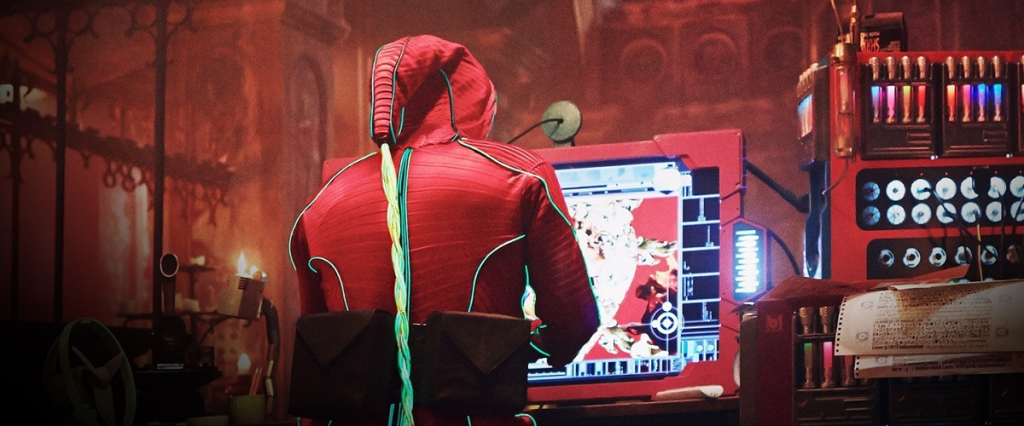
In this world, a human being’s identity is reduced to that of a consumer, people define themselves almost entirely by the products they use and media they consume, and there is a general oblivious blind optimism thanks to how convenient life is and how easy it is to pass each day simply consuming.
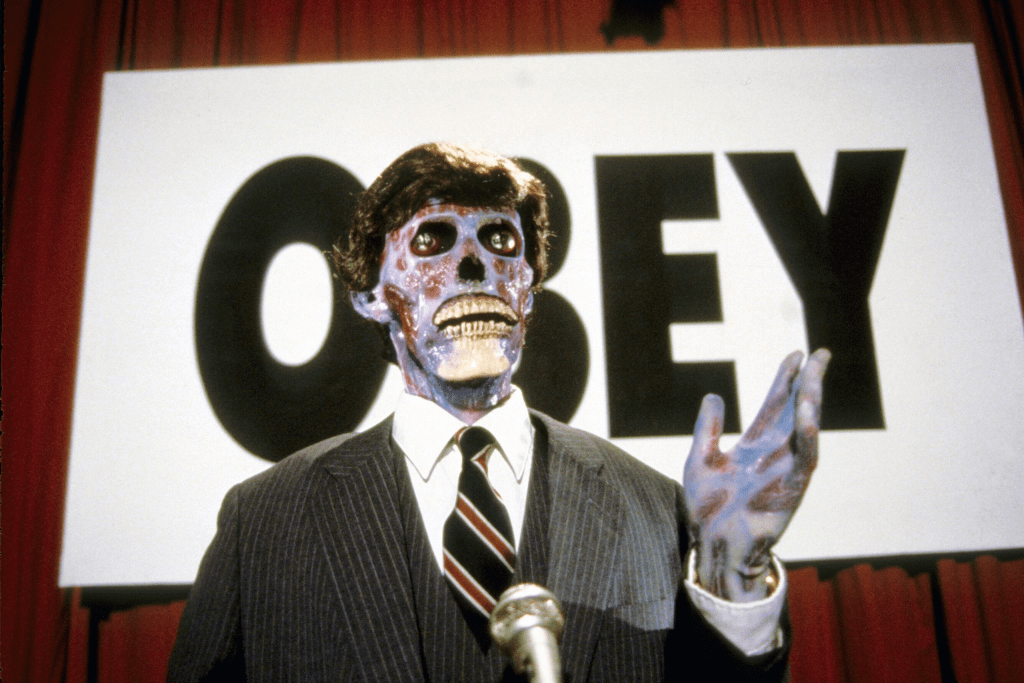
A Bubblegum Dystopia is a world where all power is held by one or multiple totalitarian corporate entities that make the world vibrant, convenient, and filled with endless innovations and content that function to fill every hour of a human life. In this world, a human being’s identity is reduced to that of a consumer, people define themselves almost entirely by the products they use and media they consume, and there is a general oblivious blind optimism thanks to how convenient life is and how easy it is to pass each day simply consuming. Contemporary examples of Bubblegum Dystopias in film and television include They Live (1988), Wall-E (2008), The Lego Movie (2014), Sorry to Bother You (2018), Maniac (2018), The Mitchells vs The Machines (2021), and Barbie (2023).
This type of story is by no means new in American media. Bradbury’s 1953 novel Fahrenheit 451 brought us a society of mile long billboards, routine overdoses and blood replacement by machines, candy-colored spectacle and dancing clowns on screens that cover every wall of your home, and a blind optimism that even though bombs are dropping everywhere things are perfectly wonderful because there’s a new episode of everyone’s favorite show. Fahrenheit is unique from other Bubblegum Dystopias in that no corporate entity manufactured its consumption culture. Faber, a professor and mentor to protagonist Montag, explains that:
“The public itself stopped reading of its own accord… So few want to be rebels anymore. And out of those few, most, like myself, scare easily. Can you dance faster than the White Clown, shout louder than ‘Mr. Gimmick’ and the parlor ‘families’? If you can, you’ll win your way, Montag. In any event, you’re a fool. People are having fun.”
And Faber’s observation begs the question: who is responsible for the genesis of a Bubblegum Dystopia? Is it the society that prioritizes convenience, consumption, and self-interest? Or is it the corporate entities that prioritize profit, consumption, and self-interest?
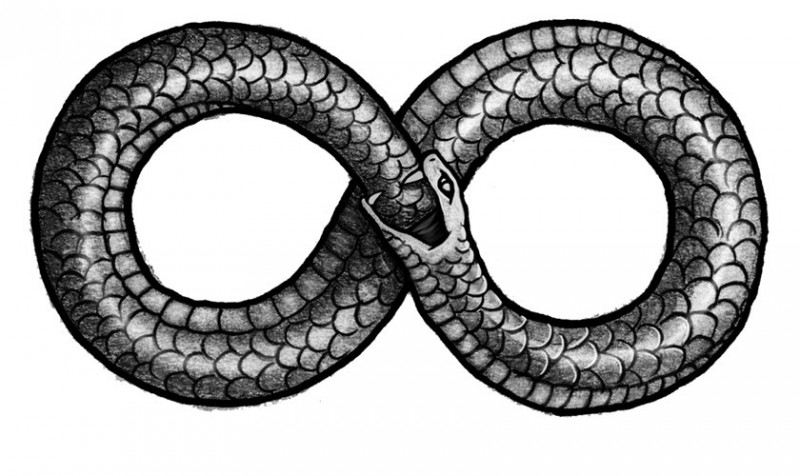
In this way Bubblegum Dystopia is our age’s neon Ouroboros eating its own tail. But instead of representing the cycle of endings and beginnings, our sticky sweet serpent is an endless loop of product releases, planned obsolescence, targeted ads, fast fashion, trending audio, social media beef, and countless other forms of content delivered specifically to you courtesy of complex algorithms created by corporate entities. A serpent that seeks constantly to profit from fleeting trends and virality, ours consumes ceaselessly and is yet more malnourished than ever.
As I write, the line between fiction and reality blurs. And that’s why Bubblegum Dystopia has not been categorized as a genre for so long. Its tenets have been integrated into American policy and society since the industrial revolution. The Roaring ‘20s unleashed unprecedented levels of what sociologist Thorstein Veblen called “conspicuous consumption,” or the purchase and use of goods to project an image of wealth and status. Veblen originally observed this among wealthy individuals, and it mainly referred to luxury goods and services. However, in an age of pricing ladders, imitation brands, online shopping, and social media–everyone can consume conspicuously.
Cheekface, one of my favorite bands currently making music, released a single in 2020 titled “Best Life.” One verse of the song ends with this proclamation: “I’m getting a Gucci logo stick-and-poke. It’s cheaper than therapy!” This line captures so much of the modern consumerism that largely constitutes Bubblegum Dystopia. The things we need like therapy, healthcare, quality education, and housing have such inflated high prices that we substitute necessities with cheap products and diversions that meet only one need—passing the time until our breath stops. Corporations are not too worried about when that breathing ends, so long we consume from their troughs from womb to tomb.
“In [Orwell’s] 1984, people are controlled by inflicting pain. In Brave New World, they are controlled by inflicting pleasure. In short, Orwell feared that what we fear will ruin us. Huxley feared that what we desire will ruin us.”
The grandfather of Bubblegum Dystopia is most likely British author Aldous Huxley, whose 1932 novel Brave New World introduced humanity to the concept. As writer Neil Postman observed in his book Amusing Ourselves to Death, “In [Orwell’s] 1984, people are controlled by inflicting pain. In Brave New World, they are controlled by inflicting pleasure. In short, Orwell feared that what we fear will ruin us. Huxley feared that what we desire will ruin us.”
Chew. Blow. Pop. Repeat. No need to swallow. Welcome to Bubblegum Dystopia.

 Stephen Nothum
Leave a comment